Buying a Home During Hurricane Season in Delray Beach & Boca Raton

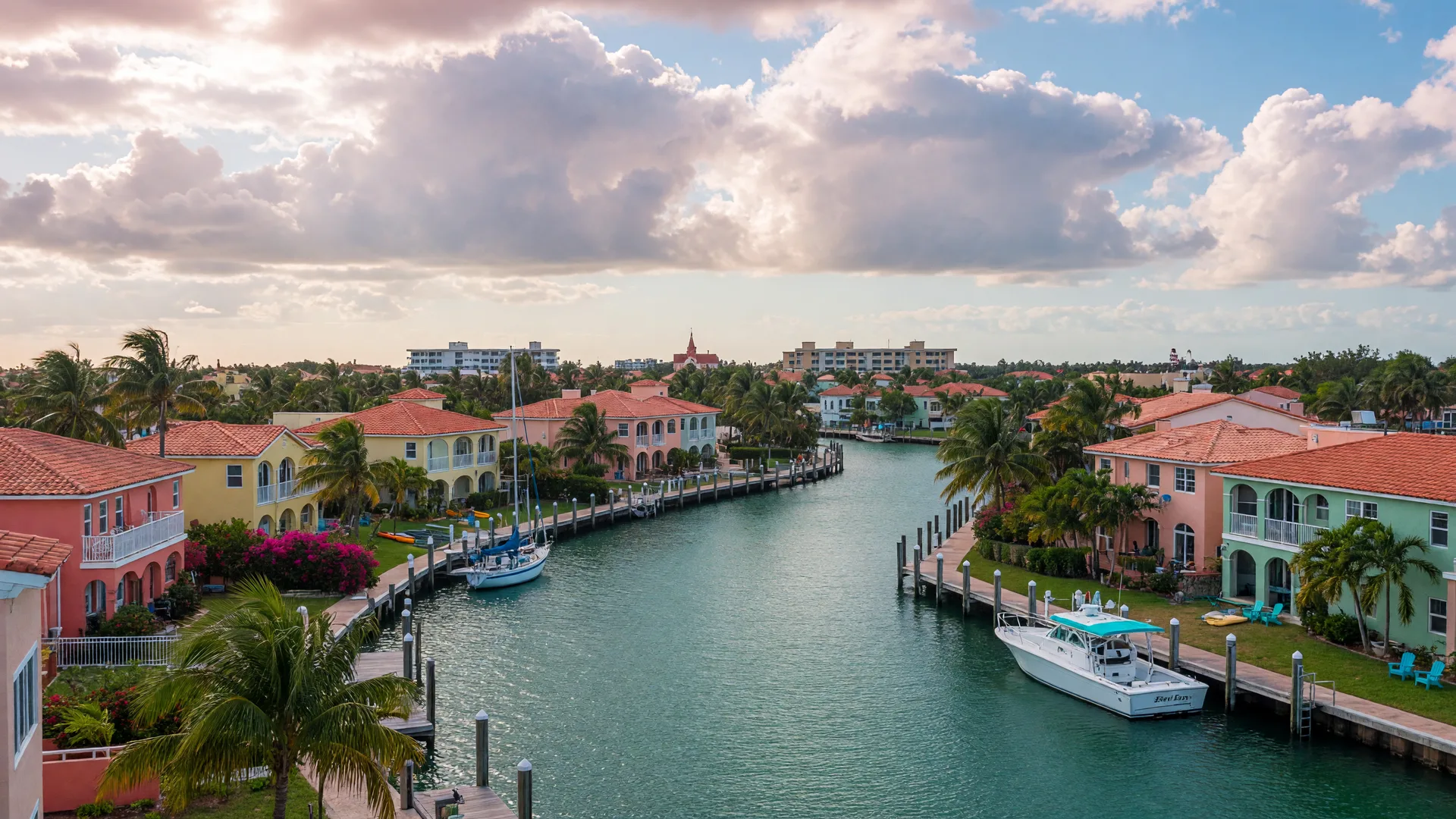
Buying during hurricane season is normal in South Florida, and it can be a smart move if you do your homework. The season officially runs June 1 through November 30, and Delray Beach and Boca Raton have not taken a direct hit since Wilma in 2005, yet coastal buyers still ask about storms before almost anything else. This guide is the honest version of what I tell clients: what the storm history really shows, which numbers matter on every coastal listing, and how to buy with confidence between now and the end of the season. I tour these neighborhoods every week, so this is the same checklist I use when I put a buyer in the car.
Hurricane Season Runs June 1 Through November 30
You do not have to guess when the season starts and ends. NOAA sets the Atlantic hurricane season from June 1 through November 30, and roughly 97 percent of Atlantic tropical storm activity happens inside that window. As of late October, we are in the tail end of the season: the 2025 season wrapped on schedule with 13 named storms, five hurricanes, and four major hurricanes, and South Florida's coast came through it without a direct strike.
The practical takeaway is that "hurricane season" is a defined six-month period, not a permanent state of the market. Sellers list, buyers buy, and closings happen every single month of it. The question is not whether you can buy in October; it is whether the house you are buying was built and maintained to handle a storm that may never come.
What a Direct Hit Actually Looks Like Here
The honest way to think about risk is history, and the history here is specific. Wilma crossed South Florida on October 24, 2005 as a Category 3 with a direct hit on Boca Raton; Delray Beach recorded 105 mph winds with the eye overhead for about 45 minutes. Palm Beach County lost an estimated 28,000 tile roofs, power went out to roughly 98 percent of FPL customers for up to three weeks, and more than 55,000 homes and 3,600 businesses in the county were structurally impacted. Wilma is the benchmark storm here precisely because it is the last direct hit either city has taken.
Irma in September 2017 stayed west of the coast, but Boca Raton still saw sustained tropical-storm winds of 60 to 75 mph, gusts over 90, and localized flooding along the El Rio and Hillsboro canals. Milton in October 2024 made landfall about 117 miles north of us near Siesta Key; in coastal south Palm Beach County the impact was mostly downed power lines in Highland Beach and scattered tree limbs in Delray Beach and Gulf Stream, while the outer bands spun up 15 confirmed tornadoes elsewhere in South Florida, including an EF3 in Palm Beach Gardens.
That Milton weekend, the reports I heard from clients across Delray, Gulf Stream, and Highland Beach were mostly tree limbs and a few downed lines. The homes themselves held. That is what a well-built coastal South Florida house with impact glass and a modern roof does in a near-miss: it stays dry and keeps its shingles. The lesson I give buyers is not that storms never happen here, it is that mitigation dramatically changes the outcome, and mitigation is something you can verify before you make an offer.
The Two Numbers That Matter on Every Coastal Listing
Every coastal listing in Delray Beach or Boca Raton comes down to two numbers: the flood zone and the elevation. The flood zone letter tells you whether the property sits in a FEMA Special Flood Hazard Area, land with at least a 1 percent annual chance of flooding, which shows up as zones beginning with A or V. If it does, and you use a federally backed loan (FHA, VA, or a mortgage from a federally regulated lender), flood insurance is required as a condition of the loan. Required coverage is the lesser of your loan balance, the building's insurable value, or the NFIP maximum of $250,000 for a residential building, and policies are written through the National Flood Insurance Program at floodsmart.gov.
The elevation certificate is the document that tells you where the house sits relative to the base flood elevation. I ask for both before the showing, not after. A home a foot or two above base flood elevation is a very different asset than one sitting below it, even on the same street. My East Delray flood zone guide maps the zones street by street, and I bring that map to every coastal appointment.
Flood Insurance and Wind Insurance Are Two Separate Policies
Buyers routinely assume one policy covers everything. In Florida it comes in two parts. Flood insurance is separate and usually written through the NFIP or a private flood carrier. Wind coverage sits inside your homeowners policy for most inland properties, but on the coast it is often its own wind-only policy, because private carriers only take on so much wind exposure. When private coverage is unavailable, Citizens Property Insurance is Florida's insurer of last resort, and state law caps how fast Citizens can raise rates, a 14 percent glide path for 2025.
There is actually good news in the rates this year: in late 2025 Citizens' board approved its first average rate decrease since 2015, with roughly 3 in 5 policyholders seeing an average cut of about 11.5 percent, around $359 a year, effective June 2026 subject to state approval. It is one sign the Florida market is stabilizing after a brutal run. That said, never buy on averages; get a real quote for the exact address before you write an offer. My South Florida homeowners insurance guide walks through coverage, and the insurance budget deep dive breaks down real premium numbers. If you are weighing oceanfront versus Intracoastal, the oceanfront vs Intracoastal breakdown explains why VE zones on the ocean price differently from AE zones along the waterway.
What I Check Before I Recommend a Waterfront or Flood-Zone Home
Here is the checklist I run on every coastal property I take a client to see, in order:
- Flood zone letter and elevation certificate. Required reading before the showing, not after.
- Flood claim history on the property. Ask for it in writing. Past claims tell you how the property actually behaves in heavy water.
- Roof age and wind-mitigation features. Impact glass or shutters, a hip roof, and a secondary water barrier are the difference between a storm story and a claim.
- Seawall condition. On canal and Intracoastal homes this is a five-figure item; cracks, lean, and erosion are red flags.
- Condo financial health. Check how the association handles the new reserve and inspection rules; an underfunded building can hit owners with big storm-season assessments. My condo reserve law breakdown covers exactly what to ask for.
- An insurance pre-quote. Send the address to your agent before the offer so the premium is a known number, not a surprise at the appraisal.
For waterfront buyers, my Delray Beach waterfront guide expands each of these points into a full due-diligence list, from dock permits to flood claims.
Why Buying During Hurricane Season Can Work in Your Favor
Here is the part buyers do not expect: the season itself can be a strategic time to buy. Sellers who list in October and November usually want a serious buyer, and the buyers who wait "until after season" end up back in competition with snowbird-season demand in January. You also get the most honest version of a house in the fall: if a roof has a problem or a seawall has an issue, storm season finds it, and the inspection and insurance quote will tell you exactly what you are buying.
The quieter advantage is psychological. Buyers who do this diligence in October can be under contract, inspected, and closed before the seasonal rush, while the same house in winter might draw multiple offers. Timing is a real lever, and the best time to buy guide walks through the full seasonal cycle. My honest read, after showing homes in every month of the year: the calendar is never a reason to skip the right house, and the storm check is never something to skip either.
Hurricane Season Home Buying: Frequently Asked Questions
Should I avoid buying a home during hurricane season? No. The Atlantic season runs June 1 through November 30, and closings happen every month of it in Delray Beach and Boca Raton. What the season changes is diligence, not timing: check the flood zone, elevation certificate, roof age, and a real insurance quote before you offer, and a late-October or November purchase can close before the seasonal rush in January.
Do I have to buy flood insurance in Delray Beach or Boca Raton? If the property sits in a FEMA Special Flood Hazard Area (zones beginning with A or V) and you are using a federally backed loan, yes, flood insurance is required as a condition of the loan. The policy is written through the National Flood Insurance Program, and required coverage is capped at $250,000 for a residential building. The first step is pulling the property's flood zone letter and elevation certificate.
How much does insurance cost on a coastal South Florida home? It varies house to house, and averages do not price your specific property. Wind and flood are two separate policies, and premiums depend on elevation, roof age, construction, and distance from the water. Get a real quote for the exact address before you write an offer, and budget for both policies, not just one.
Has Delray Beach or Boca Raton been hit by a major hurricane recently? Wilma in October 2005 was the last direct hit: it crossed Boca Raton as a Category 3, and Delray Beach recorded 105 mph winds with the eye overhead for about 45 minutes. Since then, Irma (2017) tracked west of the coast, and Milton (2024) made landfall about 117 miles north near Siesta Key, leaving coastal south Palm Beach County with mostly tree and power-line damage. A direct strike is possible in any season, which is exactly why mitigation features and due diligence matter.
Related Reading
Buying before the season ends? Let's check the house together.
I tour these neighborhoods every week, and I would rather spend an hour with you on a flood map and an insurance quote than watch you learn the hard way after closing. Call or text me and I will walk you through any address on your shortlist.
Call or text (561) 915-8590 Send a Message