Oceanfront vs Intracoastal: Which Delray & Boca Waterfront Buy Wins in 2026?

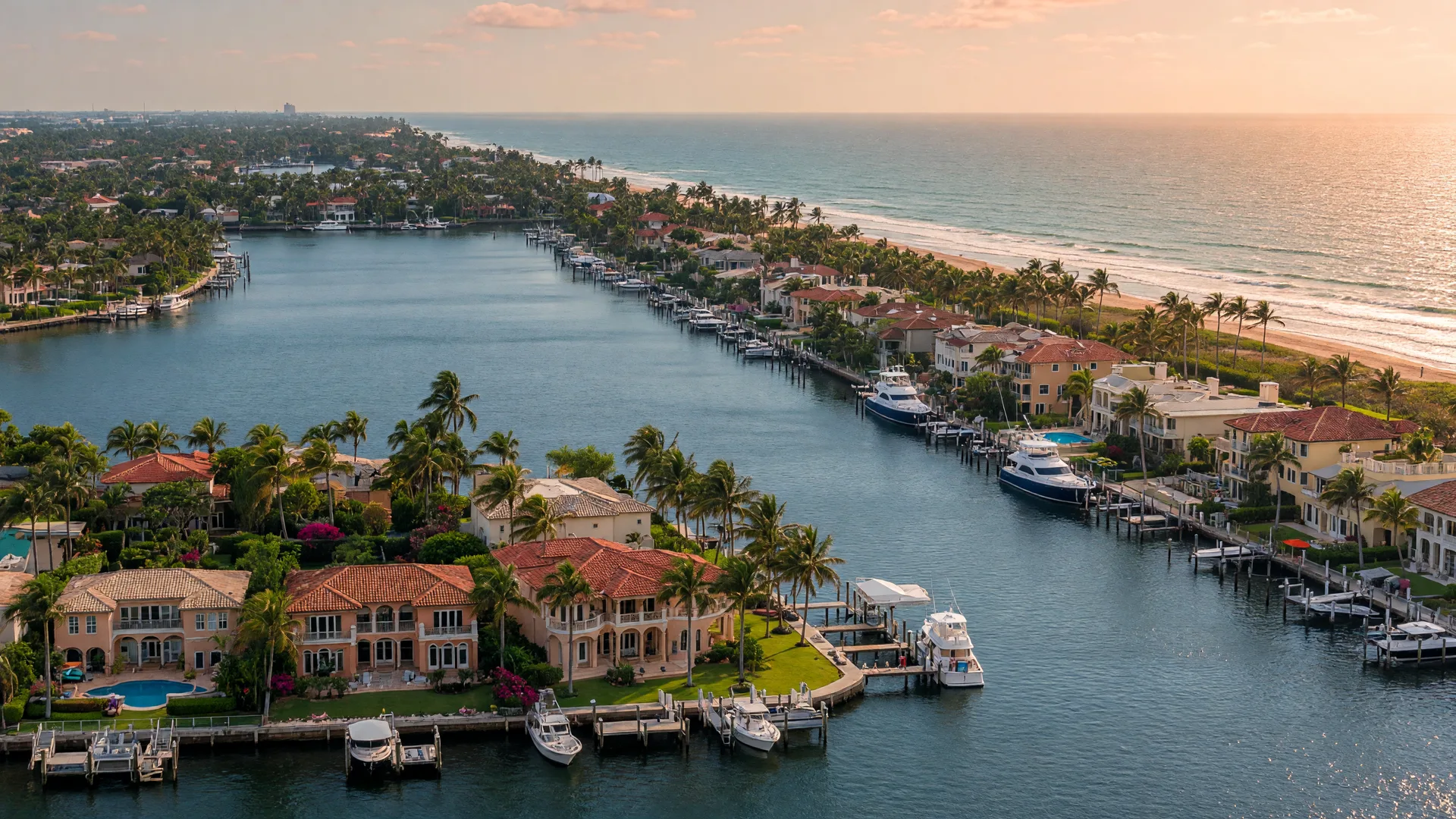
If you're shopping the waterfront in Delray Beach or Boca Raton, the first decision isn't which neighborhood, it's which water: direct oceanfront on the Atlantic, or an Intracoastal home with your own dock. This guide breaks down how 2026 pricing, flood insurance, boating access, and day-to-day lifestyle differ between the two, so you can see which one actually fits your life. I show both types of property every week, and here is the honest version of the trade-offs.
The Numbers First: the 2026 Price Gap
Let's start where I always start, with the numbers. Current South Florida waterfront listing data shows a real, consistent premium for direct Atlantic frontage. In Delray Beach, oceanfront single-family homes are averaging roughly $1,385 per square foot, while Intracoastal and waterfront listings run around $1,083 per square foot. In Boca Raton the gap is wider: oceanfront averages about $1,829 per square foot versus roughly $1,012 to $1,427 per square foot on the Intracoastal, depending on the source and the submarket.
In plain terms, oceanfront runs somewhere between 25 and 80 percent higher per square foot, and the spread is widest at the very top of the market. A direct-ocean estate in Delray can climb into the tens of millions, while most Intracoastal homes stay below $15 million. These are listing averages, so individual lots, dockage, and new construction move any single home off the line, but the direction is unmistakable.
What Oceanfront Actually Buys You
I walk the beach path at Seagate and the quiet oceanfront streets of Highland Beach and Gulf Stream most weeks, and I know exactly what people are paying for. You get the sound of the surf, wide open water and sky, sunset over the ocean if you're on the west side of A1A, and the shortest walk in Florida to the sand. There is no dock maintenance, no boats to manage, and in many oceanfront buildings the association handles the exterior entirely.
What you give up is the boating lifestyle. Most direct oceanfront lots have no dock at all, and the ones that do are rare and priced accordingly. If your vision of waterfront living includes a boat lift and heading out to the Inlet on a Saturday morning, oceanfront usually means a marina slip and an extra expense. Oceanfront is also the most exposed position in a state that gets hurricanes, which shows up in your insurance line.
What Intracoastal Buys You
The Intracoastal is where the boat people live, and in Delray and Boca that means deep water, private docks, and direct runs to the Atlantic through the Lake Worth Inlet or the Boynton Inlet. On my weekly tours I spend as much time on the East Delray Intracoastal, in the Marina Historic District near the Atlantic Avenue bridge, and in Boca's Camino Gardens canals as I do anywhere else. The homes are often larger for the price, the lots are deeper, and the water is calmer and more usable.
There is a trade-off in the view. Intracoastal views are across to the barrier island rather than out to open ocean, and if you're on the west side you're watching the sunset over the mainland instead of over the water. For a buyer who wants boat access, more house for the money, and calmer water, that is usually a deal they make happily.
The Insurance Reality: VE vs AE
Insurance is the part buyers underweight and the part that bites later. Under the NFIP's Risk Rating 2.0, flood premiums are priced per property rather than by flood zone letter, so your exact quote depends on elevation, construction, and distance to the water. The pattern still holds though: oceanfront homes in the coastal high-hazard area (Zone VE) typically carry annual flood insurance of roughly $4,000 to $12,000 or more, while Intracoastal homes in Zone AE commonly fall between $1,500 and $5,000.
The single biggest lever is elevation. Each foot above the base flood elevation cuts premiums roughly 10 to 20 percent, and being below BFE can push them up 50 to 100 percent. A well-elevated oceanfront home on pilings can end up cheaper to insure than a low-lying Intracoastal home, which is why I insist every waterfront buyer pull an elevation certificate and a real quote before writing an offer. My South Florida insurance budget guide walks through the full picture, and the East Delray flood zone guide maps the zones street by street.
Boat Access Is the Real Dividing Line
Strip away the views and the premiums, and the question that actually decides it is simple: do you own a boat, or do you want to? If the answer is yes, an Intracoastal or deep-water canal home with a dock and a lift is the clear play. Delray's Tropic Isle is my favorite example, a deep-water boating community with direct ocean access and no HOA. Boca's Camino Gardens and Royal Palm Yacht & Country Club sit on the same kind of canals.
If the answer is no, and the appeal is the beach and the open water, oceanfront gives you the lifestyle without a boat to manage. I have watched buyers make both choices this year, and the ones who are happiest are the ones who matched the water to how they actually spend their weekends, not to a brochure.
Which Neighborhoods Sit on Each Water
Once you know which water you want, the neighborhoods narrow fast. Here is the map I use with every waterfront client:
- Direct oceanfront: Delray Beach's Seagate area and the beachfront strip east of the Intracoastal, then the oceanfront towns of Highland Beach and Gulf Stream to the south. In Boca Raton, direct Atlantic frontage clusters in South Beach, Royal Palm, and the coastal strip between the beach and the waterway.
- Intracoastal and canal: East Delray's Seabreeze, the Marina Historic District, and the Cove along the waterway, plus deep-water Tropic Isle and the lake-and-canal neighborhoods further west. In Boca, Camino Gardens and the canals around Royal Palm Yacht & Country Club.
For a full street-level tour of the Delray side, my East Delray waterfront deep dive covers the Intracoastal, canal, and beachfront options in detail.
My Take: Who Should Pick Which
I get asked this constantly, so here is my honest answer. Buyers who want the trophy address, the sound of the surf, and the shortest walk to the beach should be on the ocean, and they should budget for the premium and the insurance. Buyers who own a boat, want more square footage for the dollar, or want to actually use the water every day should be on the Intracoastal.
I had a buyer last month who was certain he needed oceanfront. We stood on the dune walkover at the north end of Delray and watched the surf for a while, and it was beautiful. Then we walked the dock at a deep-water canal home with a 40-foot boat lift and a boat he was already shopping for, and he did a full 180 on the spot. The water you will actually use is the one that wins.
If you want to see both side by side, I'm happy to set up a day of showings across Delray and Boca. Start with my Delray Beach waterfront guide and the Boca Raton waterfront guide for current pricing, then let's go walk the docks and the beach together.
Oceanfront or Intracoastal: Frequently Asked Questions
How much more expensive is oceanfront than Intracoastal in Delray Beach and Boca Raton? Current listing data shows oceanfront running roughly 25 to 80 percent higher per square foot, with Boca's direct Atlantic frontage carrying the bigger premium. Delray oceanfront averages about $1,385 per square foot versus $1,083 on the Intracoastal; Boca oceanfront averages about $1,829 versus $1,012 to $1,427.
Is flood insurance more expensive on the ocean? Generally yes. Oceanfront Zone VE homes typically run $4,000 to $12,000 or more per year, while Intracoastal Zone AE homes usually fall between $1,500 and $5,000. Elevation above the base flood elevation is the biggest variable, and a well-elevated oceanfront home can cost less to insure than a low-lying Intracoastal one.
Which should I buy if I own a boat? Intracoastal and deep-water canal homes with docks and lifts are almost always the better buy for boaters. Direct oceanfront lots rarely have dockage, which usually means a marina slip and an extra cost.
Which holds its value better? Both are scarce and support long-term value. Oceanfront is the top-of-market trophy, while Intracoastal has a wider buyer pool and a lower entry point per square foot. The stronger value is the water that fits how you actually live.
Related Reading
Not sure which water fits your life?
I tour both sides of this market every week. Call or text me and I'll set up a day of showings that lets you feel the difference for yourself.
Call or text (561) 915-8590 Send a Message