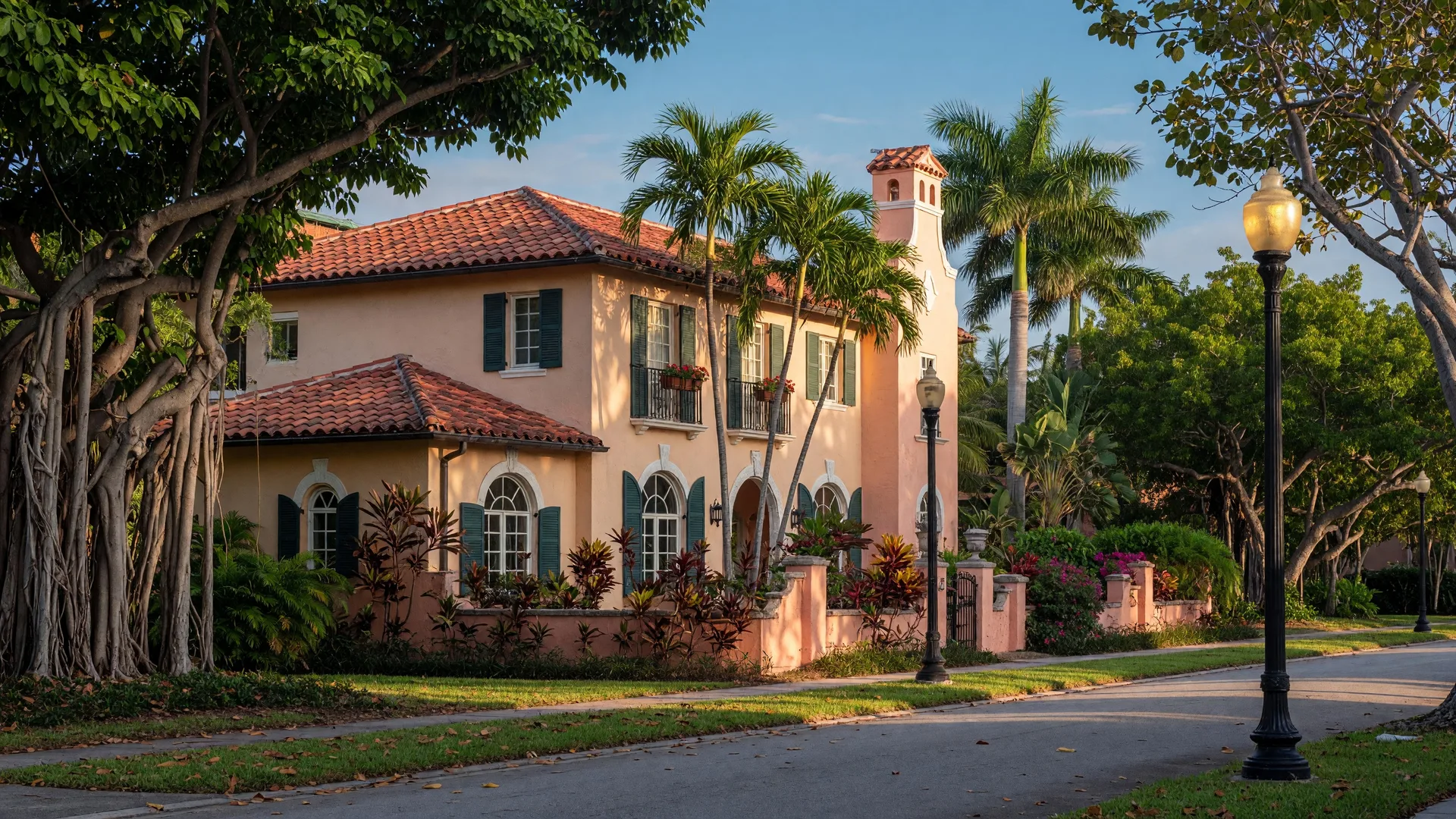
The Delray Beach Historic District is one of the most charming neighborhoods in Palm Beach County. Located just west of the Intracoastal Waterway and centered around the downtown core, this tree-lined district feels a world apart from the condos and coastal mansions east of A1A. It offers a different kind of lifestyle — one rooted in history, architecture, community, and a pace of life that rewards slowing down.
A Note on Location
The Delray Beach Historic District is located west of the Intracoastal Waterway, placing it geographically just outside the "East Delray" area bounded by I-95 and the ocean. However, it's closely tied to the East Delray lifestyle — walkable to Atlantic Avenue, the beach, and all the downtown amenities — and many buyers shopping East Delray consider it alongside the neighborhoods east of the Intracoastal. I've included it in the East Delray topic cluster because it genuinely belongs in the conversation.
A Brief History
Delray Beach was originally settled in the late 19th century as a farming community, and the Historic District contains the city's oldest surviving homes and buildings. The district was officially added to the National Register of Historic Places in 1993, recognizing the architectural and historical significance of its roughly 600 contributing structures. The neighborhood's development peaked between 1920 and 1950, when Delray's population boomed and the Florida land rush transformed the coast.
What makes the Historic District special is that it tells the story of Old Florida. Before the high-rises, the golf courses, and the gated communities, Delray Beach was a place of modest bungalows, Mediterranean Revival villas, and frame vernacular cottages set under a canopy of mature banyan and live oak trees. The Historic District preserves that era in a way that few South Florida neighborhoods can match.
Architectural Styles You'll Find
The Historic District is a living museum of early-to-mid 20th century Florida architecture. Here are the most common styles:
Mediterranean Revival (1920s–1930s)
The signature style of Florida's land-boom era. Stucco walls, barrel-tile roofs, arched windows and doors, wrought-iron details, and courtyards. These homes are the most sought-after in the district and command the highest prices. The craftsmanship in the original details — hand-painted tiles, carved wooden doors, decorative ironwork — is extraordinary.
Frame Vernacular (1910s–1930s)
The "Old Florida cottage" style. Wood-frame construction, raised foundations, front porches, metal or shingle roofs. These are the more modest homes in the district, often on smaller lots, but they offer the most authentic historic character and are the most affordable entry point into the neighborhood.
Mission Revival (1920s)
A cousin to Mediterranean Revival, Mission Revival emphasizes plain stucco walls, parapeted gables, and simpler decorative details. These homes feel more restrained and grounded than their Mediterranean counterparts, with clean lines and a sense of solid permanence.
Post-War Ranch (1940s–1950s)
Single-story, low-slung mid-century homes with attached garages, large windows, and open floor plans. These are more common on the periphery of the Historic District and appeal to buyers who want space and mid-century charm without the premium of a full Mediterranean restoration.
What Makes It Unique
The Historic District's defining feature is its trees. The canopy of ancient banyans, live oaks, and royal palms creates a shaded, almost cathedral-like atmosphere on the residential streets. SW 2nd Avenue, SW 3rd Avenue, and the surrounding blocks are some of the most beautiful streets in all of Delray Beach — winding, lined with mature trees, and dotted with historic homes set back from the road.
The sense of community here is also distinct. The Historic District has an active neighborhood association, annual home tours, and a resident-driven ethos of preservation and pride. Neighbors know each other, streets are safe for walking and biking, and there's a shared commitment to maintaining the character of the area.
And despite being "historic," the neighborhood isn't isolated. You're a 5-minute walk to Atlantic Avenue restaurants, a 10-minute bike ride to the beach, and minutes from the Delray Beach Tennis Center and Old School Square. It offers the perfect balance: historic charm and quiet residential streets during the day, with the energy of downtown Delray a short walk away in the evening.
Price Ranges
Entry-level cottages and bungalows, typically frame vernacular construction on smaller lots. These need updating and work, but offer the most affordable entry into the district. Often located on the district's western and southern edges.
Renovated Mediterranean Revival homes on good lots. Updated kitchen, bathrooms, impact windows, and landscaping. This is the most active price band in the district and offers the best value for buyers who want historic character without the renovation project.
Premium historic estates on the best blocks. Fully restored with meticulous attention to period details, large lots, guest houses or pool houses, and the highest-quality finishes. These properties rarely come to market and command a premium from buyers who value authenticity and craftsmanship.
Preservation Rules You Need to Know
Owning a home in the Historic District comes with responsibilities. The Delray Beach Historic Preservation Board oversees exterior changes to properties within the district, and there are clear guidelines on what you can and cannot do:
These rules sound restrictive, and they are. But for the right buyer, they're also protection — they ensure that your neighbor can't paint their house an incongruous color or tear down a historic home to build a modern box. The preservation rules maintain the character and value of the entire district.
Why People Love Living Here
The residents I've worked with in the Historic District consistently cite the same reasons for choosing this neighborhood:
- Character you can't build today: The craftsmanship, materials, and proportions of the historic homes are something you simply cannot replicate in new construction at any price.
- The tree canopy: The mature trees create a shaded, cool, peaceful environment that feels dramatically different from the rest of South Florida.
- Walkability to downtown: Despite the quiet, residential feel, Atlantic Avenue restaurants, shops, and entertainment are a short walk away.
- Community: The neighborhood association, home tours, and annual events create genuine connections between residents.
- Stability and appreciation: Historic districts rarely experience the boom-and-bust cycles of suburban developments. Values here tend to be stable and steadily appreciating.
My Take on the Historic District
The Delray Beach Historic District isn't for everyone. If you want turn-key, low-maintenance, modern construction, this is probably not your neighborhood. But if you value authenticity, craftsmanship, and a home with a story to tell, there's no place like it in all of Palm Beach County. The preservation rules are real and require a buyer who understands and respects them. I've helped several buyers navigate the Historic Preservation Board process, and I can help you understand exactly what a particular property's renovation potential looks like before you make an offer. See the dedicated Delray Beach Historic District neighborhood guide for an even deeper dive.
More East Delray Resources
For a guide to the subdivisions and micro-neighborhoods within East Delray, see the East Delray Subdivisions guide covering Seagate, Tropic Isle, Lake Ida, and more. And for the best places to shop and browse, check out the Shopping in East Delray Beach guide.
Interested in the Historic District?
I know every block, every contributing structure, and every preservation consideration in the Historic District. Whether you're looking to buy, sell, or just explore the neighborhood, let's talk. Also read the Complete East Delray Beach Guide for the broader picture of living in this area.