Downtown Delray vs East Delray Beach: Which Is Right for You?

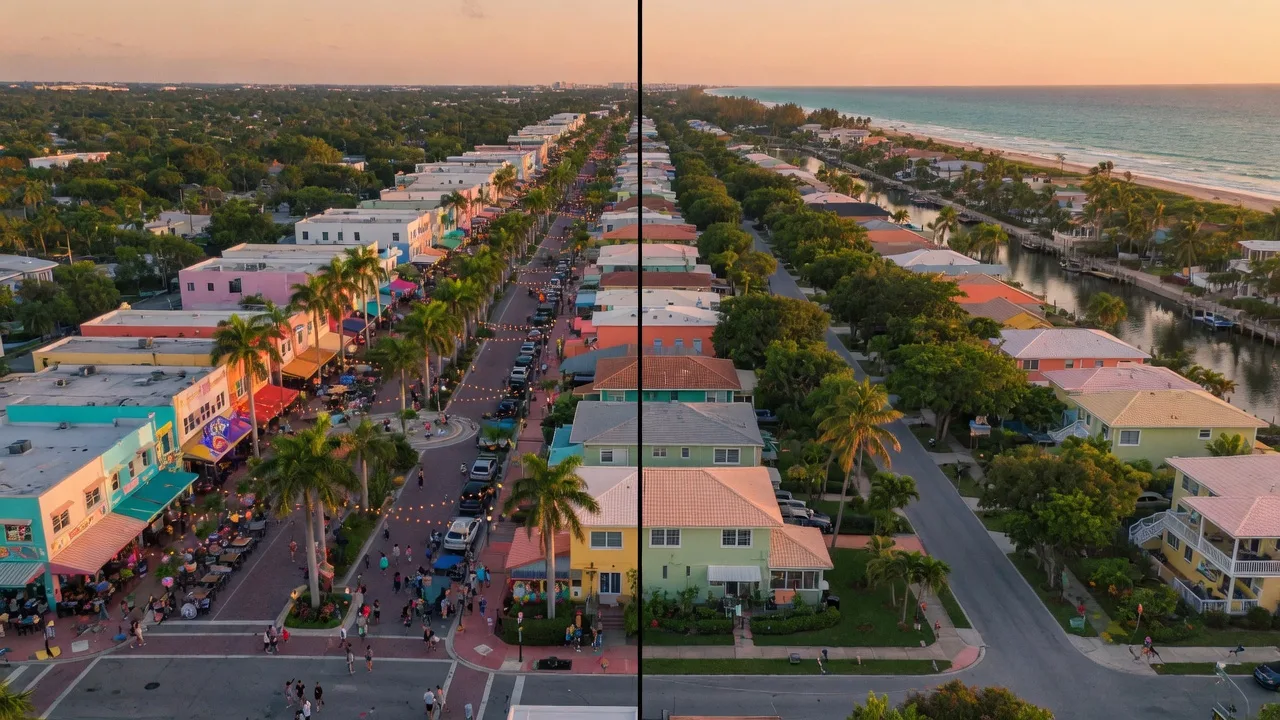
When buyers tell me they want to live in East Delray Beach, they often actually mean one of two different things. Some want to be right in the middle of Atlantic Avenue — steps from the restaurants, bars, galleries, and the energy that makes Delray famous. Others want something quieter — a tree-lined residential street where you can walk to dinner in 10 minutes but sleep with the windows open at night.
Both are East Delray. But they are fundamentally different living experiences, and confusing the two is one of the most common mistakes I see buyers make. The difference between a condo on Atlantic Avenue and a single-family home on a side street three blocks north is not just price. It is a completely different lifestyle.
I have helped dozens of buyers navigate this exact decision. Here is an honest, detailed comparison to help you figure out which side of East Delray is the right fit for you.
What Defines Downtown Delray vs East Delray Beach
Let's start with clear definitions, because the boundaries matter.
Downtown Delray is the compact, high-density core centered on Atlantic Avenue roughly between Swinton Avenue to the west and the Intracoastal Waterway to the east. This is the stretch of Atlantic that everyone pictures when they think of Delray Beach — outdoor patios, string lights, rooftop bars, boutique shops, and the pedestrian energy that peaks during Season (December through April). The downtown core includes the blocks immediately north and south of Atlantic, typically up to NE 1st Street and SE 1st Street, where you will find most of the condo buildings, lofts, and mixed-use developments.
East Delray Beach is the wider neighborhood east of I-95, which includes downtown as a subsection but extends far beyond it. East Delray encompasses the residential side streets north of Atlantic toward George Bush Boulevard, south toward Linton Boulevard, east to A1A and the beach, and all the way west to I-95. This is where you find single-family homes on quiet blocks, the Pineapple Grove Arts District, the schools, and the everyday fabric of neighborhood life. Downtown is the heart of East Delray, but East Delray is the whole body.
Think of it this way: downtown is where you go on Friday night. East Delray is where you live. One is a destination; the other is a community.
Price Comparison: Downtown Condos vs East Delray Homes
The pricing difference between downtown and the broader East Delray neighborhood is significant, and understanding it is essential to making the right choice.
Downtown Delray (Atlantic Avenue core): Properties directly on or one block off Atlantic command a walkability premium. Condos in this zone typically range from $400K for a smaller 1-bedroom to $1.2M+ for new construction penthouses. The price per square foot in downtown buildings averages $450 to $600, and HOA fees range from $400 to $800+ per month. You are paying for the location — being able to walk out your door and be at dinner in under five minutes.
East Delray residential (side streets): Properties on the residential blocks two to four streets north or south of Atlantic Avenue offer notably more space for the money. Single-family homes typically range from $600K to $2M+, with price per square foot averaging $350 to $450. Condos on the side streets run $350K to $700K with lower HOA fees ($300 to $500). Townhomes in pocket communities like Pineapple Grove fall between $500K and $900K.
The premium for a downtown-adjacent address is roughly 10 to 20 percent over comparable East Delray properties. In my experience, the sweet spot for most buyers is the side streets within a 5 to 10 minute walk of Atlantic, where you get the best balance of price, space, and walkability.
Read the complete East Delray Beach neighborhood guide for full pricing breakdowns →
Walkability: Atlantic Avenue Core vs East Delray Streets
Walkability is the defining difference between these two areas, and it is the single most important factor in choosing between them.
Downtown's Atlantic Avenue core has a Walk Score of 90 or higher. From a downtown condo, you can walk to over 100 restaurants and bars, gourmet groceries, coffee shops, the beach, the Intracoastal, galleries, and the weekly Green Market. You genuinely do not need a car for daily life — I have clients who live downtown who drive their car once a week, if that. The trade-off is noise: live music, street traffic, and late-night foot traffic are part of the experience.
East Delray's residential streets still score well on walkability (75 to 85 Walk Score), but the experience is different. From most side street addresses, you have a 10 to 20 minute walk to the restaurant core. It is far enough to feel removed from the energy, close enough that you can still walk to dinner without thinking twice. The residential blocks east of A1A are quieter but require a longer walk or a short bike ride to reach Atlantic Avenue (15 to 25 minutes on foot).
See the full East Delray walkability guide with block-by-block analysis →
Lifestyle: Urban vs Residential Feel
The lifestyle difference between downtown and East Delray is not subtle. It is the difference between living at the party and living near it.
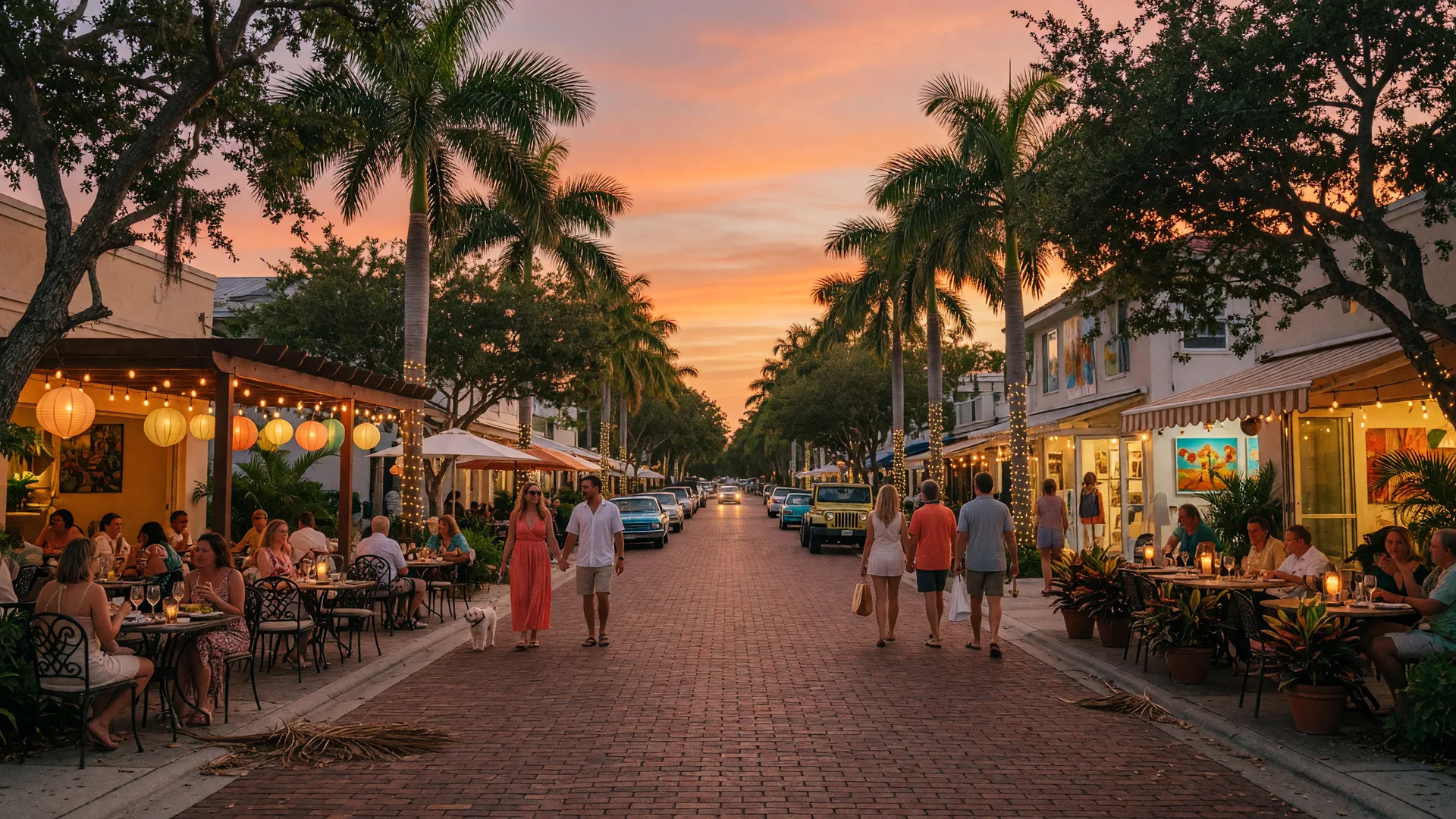
Downtown Delray lifestyle is urban, energetic, and social. You will hear live music from your balcony on weekend evenings. You will run into neighbors at the corner coffee shop. You will walk to dinner, walk to drinks, and walk home. Parking is a challenge — most downtown condos come with one assigned spot, and street parking fills up fast during Season. The demographic skews younger, with a mix of professionals, seasonal residents, and empty-nesters who want the downtown energy. If you value spontaneity and convenience over space and quiet, downtown is your answer.
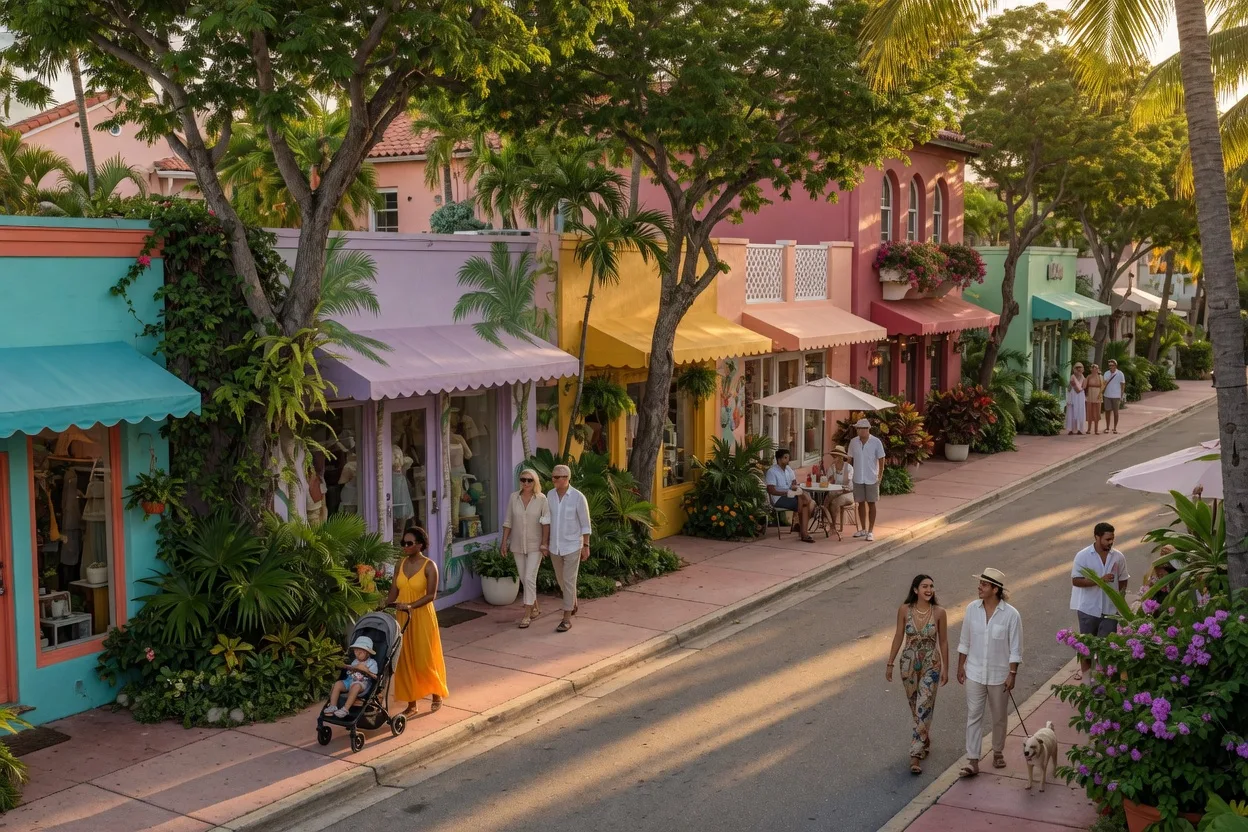
East Delray residential lifestyle is quieter, more neighborly, and more family-oriented. The side streets have a small-town feel — people know their neighbors, kids ride bikes, and weekend mornings are for yard work rather than brunch lines. From most East Delray addresses, you are still a short walk or bike ride from Atlantic Avenue, but you can also retreat to your own space. The demographic is more diverse: families, long-time residents, young couples, and retirees who want walkability without the intensity. If you want to host a barbecue in your backyard and still walk to dinner, East Delray's side streets are the answer.
Explore the East Delray dining scene →
Who Each Area Is Best For
After working with buyers across both areas, here is how I generally match people to the right part of East Delray.
Downtown Delray is best for: Young professionals and remote workers who want an urban lifestyle. Seasonal residents who want a walkable home base for the winter months. Investors buying short-term rental properties who want maximum occupancy and nightly rates. Empty-nesters who are ready to downsize and prioritize experiences over square footage. Anyone who values being able to walk everywhere, every day, without getting in a car.
East Delray residential is best for: Families who want good schools, a yard, and a quiet block. Downsizers who still want a house and a garden, not a condo. Buyers who want walkability as a bonus, not a requirement. Anyone who values parking, privacy, and space over being in the middle of the action. Long-term investors who prefer steady appreciation over cash flow. First-time buyers who are priced out of the downtown premium.
Read the complete guide to Atlantic Avenue to understand the downtown experience →
Pros and Cons of Each Area
Downtown Delray (Atlantic Avenue Core)
Pros
- Maximum walkability — Walk Score 90+
- Steps from 100+ restaurants, bars, and shops
- Strong short-term rental demand
- Maintenance-free condo living
- Vibrant social scene year-round
Cons
- Noise from nightlife and street traffic
- Limited parking — usually one space per unit
- High HOA fees ($400 to $800+ per month)
- Less privacy and outdoor space
- Traffic congestion during Season
East Delray Residential (Side Streets)
Pros
- Quieter, more private residential blocks
- More space — yards, garages, square footage
- Lower cost per square foot than downtown
- No HOA fees in non-HOA neighborhoods
- Still walkable — 10 to 20 minutes to the Ave
Cons
- Longer walk to the main restaurant core
- You may still need a car for errands
- Older homes may need updates
- Flood insurance required in most areas
- Less rental yield than downtown condos
Investment Potential: Which Area Performs Better?
I work with investors in both areas, and the answer depends entirely on your strategy.
Downtown Delray condos deliver stronger cash flow. Short-term rental properties near Atlantic Avenue command $250 to $350 per night during Season with occupancy rates of 65 to 75 percent. A well-located downtown condo can generate $40,000 to $60,000 in annual rental income. The trade-offs are high HOA fees ($400 to $800+), stricter rental caps in some buildings, and the post-Surfside regulatory environment that has led to special assessments in older buildings. If you are a cash flow investor, downtown is your play.
East Delray single-family homes are better for long-term appreciation. Land values east of I-95 appreciate steadily because supply is permanently constrained — you cannot create more land between the ocean and the highway. Single-family homes typically attract long-term tenants (12-month leases at $3,500 to $5,500+ per month) with lower turnover costs. The cash-on-cash return is lower (2 to 5 percent depending on leverage), but the appreciation trajectory is more reliable. If you are a buy-and-hold investor, East Delray residential is the safer bet. My East Delray investment deep dive breaks down the returns pocket by pocket.
My advice: if you want immediate income and you are comfortable with condo governance, buy downtown. If you want long-term wealth building with less management, buy a single-family home on an East Delray side street.
Ryan Parker
Sales Associate · SL3571861 · Coldwell Banker Realty
Not sure whether downtown or the residential side streets suit you better? I know every block of East Delray, and I would be happy to help you find the right fit. Call or text me anytime.