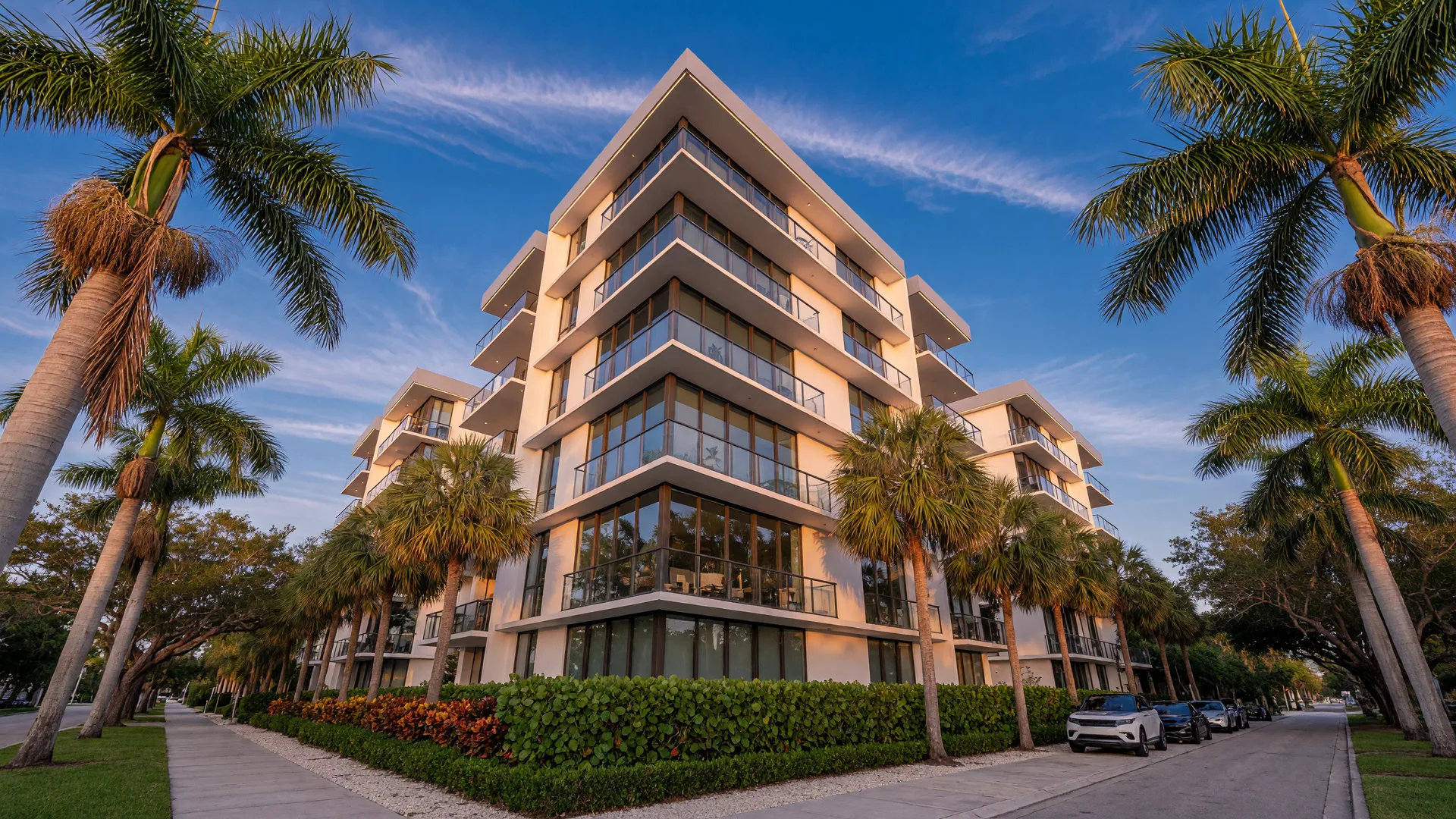
East Delray Beach has emerged as one of the most compelling real estate investment destinations in South Florida. The combination of permanently constrained coastal land supply, steady population growth from high-tax states, and year-round rental demand driven by tourism and seasonal residents creates a favorable environment for buy-and-hold investors. This guide breaks down everything you need to know about investing in East Delray Beach real estate in 2026 — from rental yields and property types to tax implications and common mistakes to avoid.
I am Ryan Parker, a Realtor with Coldwell Banker Realty, licensed in Florida (SL3571861). I work with buyers, sellers, and investors throughout South Florida's luxury coastal communities. As a RealTrends Verified agent, I have helped investors build portfolios in Delray Beach, Boca Raton, Highland Beach, Gulf Stream, and Boynton Beach. My approach is data-driven and client-focused — I help investors make confident decisions by looking at the numbers rather than relying on hype.
Why East Delray Beach Attracts Investors
East Delray Beach offers a rare combination of attributes that real estate investors look for. The area is supply-constrained, demand-supported, and positioned for long-term growth. Unlike inland markets where new developments can absorb demand, East Delray is geographically bounded by I-95 to the west and the Atlantic Ocean to the east. You simply cannot build more land in this corridor.
Timing your entry matters in a supply-constrained market like this one: when new inventory arrives shapes what is available and what it costs. For a closer look at when more homes typically hit the market, see When Will More Homes Hit the Market in East Delray Beach?
The demographic trends support continued demand. South Florida continues to attract residents from high-tax states like New York, New Jersey, and California, and Delray Beach is one of the preferred destinations for these relocations. The city's walkable downtown, award-winning restaurant scene, cultural calendar, and beach access create a quality of life that draws both full-time residents and seasonal visitors.
For a comprehensive overview of the neighborhood, see the Complete East Delray Beach Guide, which covers pricing, schools, flood zones, and everything else you need to know about living east of I-95.
Supply Constrained
No new land available east of I-95 — limited inventory supports values
Demand Supported
Year-round renters, seasonal visitors, and growing population
Diverse Inventory
Condos from $400K to luxury waterfront estates at $2M+
No State Income Tax
Florida's tax-friendly environment protects investment returns
Rental Market Overview
The East Delray Beach rental market is defined by two distinct but overlapping demand streams: seasonal (winter) rentals and year-round annual rentals. Understanding the dynamics of each is critical to building an accurate income projection.
Seasonal Rentals
From November through April, East Delray Beach experiences a surge in seasonal rental demand from snowbirds escaping northern winters. Properties within walking distance of Atlantic Avenue and the beach command the strongest seasonal premiums. Monthly rental rates during Season can be 30% to 50% above annual lease rates. A typical 2-bedroom condo that rents for $3,000/month on an annual lease can command $4,000 to $4,500/month during peak winter months.
However, seasonal rentals come with trade-offs. Occupancy gaps between tenants and during the slower summer months reduce overall annual income. Property management costs are higher due to more frequent turnover, cleaning, and maintenance. Some condo buildings restrict rentals to minimum lease terms of 6 or 12 months, eliminating the seasonal rental strategy entirely. Always verify HOA rental policies before purchasing — see the East Delray Condos & Townhomes Guide for more on HOA restrictions.
Annual Rentals
Annual rentals provide more predictable income and lower management costs. A year-round tenant eliminates the seasonal vacancy gap and reduces turnover expenses. The trade-off is lower monthly rent — typically 25% to 35% less than peak seasonal rates. For out-of-state investors and those with multiple properties, annual rentals paired with a professional property manager are usually the more practical and less hands-on strategy.
Current Rental Market Snapshot
Price Ranges for Investment Properties
East Delray Beach offers investment opportunities across a wide price spectrum. Here is what you can expect at each level:
Entry-Level: $400K–$500K
One-bedroom or small two-bedroom condos in mid-rise buildings from the 1980s and 1990s. These offer the strongest cash-on-cash returns because the buy-in is lower and rental demand is consistent from seasonal visitors and young professionals. Most will benefit from cosmetic updates. Typical gross rental yield: 5% to 6%. HOA fees: $350–$550/month.
Mid-Range: $500K–$800K
Renovated two-bedroom condos and entry-level townhomes. This is the sweet spot for investors seeking a balance of cash flow and appreciation. Updated units in well-managed buildings attract premium tenants and command higher rents. Typical gross rental yield: 4% to 5.5%. HOA fees: $400–$700/month.
Premium: $800K–$1.2M
Larger condos, luxury townhomes, and smaller single-family homes. These properties appeal to affluent seasonal tenants willing to pay premium rates for walkability and quality finishes. Appreciation potential is stronger at this level, but rental yields trend lower. Typical gross rental yield: 3.5% to 5%.
Luxury: $1M+
Waterfront estates, new-construction luxury homes, and penthouse condos. These properties offer the strongest long-term appreciation but the lowest rental yields (2% to 4%). The investor profile here is typically high-net-worth individuals seeking capital preservation, appreciation, and personal use rather than monthly cash flow.
Best Property Types for Investors
Condos
Condos are the most accessible entry point for East Delray investors. Entry prices start at $400K, and rental demand is strong thanks to the walkable Atlantic Avenue location. Condos offer maintenance-free ownership, which is attractive to out-of-state investors. The key risks are HOA financial health and rental restrictions. Some buildings restrict short-term or seasonal rentals, so always verify the HOA's rental policy before purchasing. For a detailed breakdown of the condo market, see the Condos & Townhomes Guide.
Townhomes
Townhomes offer a middle ground between condos and single-family homes. They provide more space, private outdoor areas, and often a garage, while maintaining lower HOA fees than condos. Townhomes appeal to families and seasonal renters who want more room. Price range: $600K to $1.5M. Lower turnover than condos means more stable long-term tenants.
Single-Family Homes
Single-family homes in East Delray's walkable neighborhoods appeal to families and seasonal renters. They appreciate more reliably than condos and avoid HOA rental restrictions. The trade-off is higher maintenance responsibility and lower rental yields. Single-family homes in the Historic District and west of A1A are particularly desirable. Price range: $600K to $2M+. For a full neighborhood overview, visit the Complete East Delray Guide.
Rental Yield Expectations
Rental yields in East Delray Beach are competitive with other South Florida coastal markets. Here is what investors should expect based on property type and strategy:
Estimated Gross Rental Yields by Property Type
| Property Type | Gross Yield Range | Best For |
|---|---|---|
| Entry-level condo | 5% to 6% | Cash flow |
| Mid-range condo | 4% to 5.5% | Balance |
| Townhome | 3.5% to 5% | Balance |
| Single-family home | 3% to 5% | Appreciation + cash flow |
| Luxury/waterfront | 2% to 4% | Appreciation |
Gross rental yield = annual rent / purchase price. Net yields will be lower after HOA fees, taxes, insurance, property management, and maintenance.
Short-Term vs Long-Term Rental Strategies
Choosing between short-term and long-term rental strategies is one of the most consequential decisions an East Delray investor makes. Each approach has distinct advantages and trade-offs, and the right choice depends on your financial goals, time commitment, and risk tolerance.
Short-Term Rentals (1 to 30 days)
Short-term rentals through platforms like Airbnb and VRBO offer the highest nightly rates but come with significant operational and regulatory complexity. East Delray's strong tourism draw makes it a viable market for short-term rentals, with average daily rates around $228/night and occupancy rates near 65%.
The biggest barrier to short-term rentals in East Delray is HOA restrictions. Many condo buildings prohibit leases under 6 or 12 months, and some ban short-term rentals entirely. Additionally, the city of Delray Beach has its own regulations governing vacation rentals, including licensing requirements and occupancy limits. Always research both HOA rules and city ordinances before pursuing this strategy. For detailed guidance on HOA restrictions, see the Condos & Townhomes Guide.
Long-Term Rentals (6 to 12 months)
Long-term rentals provide predictable income, lower turnover costs, and simpler management. A year-round tenant means consistent rent, fewer vacancy gaps, and less wear and tear from frequent guest turnover. For out-of-state investors or those building a multi-property portfolio, long-term rentals paired with a professional property manager are the most practical and scalable strategy.
Seasonal Rentals (3 to 6 months)
Seasonal rentals split the difference. They capture premium winter rates while operating within most HOA minimum-lease requirements. A typical seasonal strategy involves a 6-month lease at a premium rate (November through April) followed by either a lower-rate summer lease or a short vacancy for personal use or renovations. This approach works well for investors who want some personal use of the property while still generating significant income.
HOA Rules and Rental Restrictions
HOA rules are one of the most critical due diligence items for any investor buying a condo or townhome in East Delray. The specific restrictions vary significantly from building to building, and failing to verify them before purchase can destroy your investment thesis.
Common rental restrictions in East Delray condo buildings include:
- Minimum lease terms — Many buildings require leases of 6 or 12 months minimum, effectively prohibiting short-term vacation rentals.
- Rental caps — Some buildings limit the percentage of units that can be leased at any given time, and there may be a waiting list for rental slots.
- Owner-occupancy requirements — A few buildings require owners to live in the unit for a minimum period before renting.
- Application and approval fees — HOAs may charge fees to review and approve tenants, and some retain the right to reject tenants without cause.
For a deeper dive into the condo landscape in East Delray, including HOA fee structures and reserve study considerations, read the East Delray Condos & Townhomes Guide.
Flood Zone and Insurance Considerations
Most properties east of I-95 in Delray Beach fall within FEMA-designated Special Flood Hazard Areas. This is an unavoidable reality of investing in a coastal market, and it carries real costs that must be factored into every pro forma.
The two primary flood zone designations affecting East Delray investment properties are:
- Zone AE — Standard high-risk flood zone. Annual premiums typically range from $500 to $1,600 for $250,000 in coverage, depending on the property's elevation certificate and Risk Rating 2.0 assessment.
- Zone VE — Coastal high-hazard zone with wave action. Premiums are significantly higher, often $2,000 to $3,000+ annually. Properties east of A1A and along the Intracoastal are most likely to fall in Zone VE.
Under FEMA's Risk Rating 2.0 methodology, insurance premiums are now individualized rather than based solely on zone designation. Two identical homes on the same street can have very different premiums depending on elevation, foundation type, and replacement cost. Always get a specific flood insurance quote from a licensed agent before making an offer. For a detailed breakdown of flood zones in East Delray, including maps and cost estimates by area, see the East Delray Flood Zones Guide.
Beyond flood insurance, investors should also account for windstorm insurance (typically bundled into homeowner's insurance or the master HOA policy for condos) and the rising cost of property insurance across Florida. Budget for annual insurance increases of 5% to 15% to avoid surprises.
Tax Implications
Florida's tax environment is a significant advantage for real estate investors. The state has no personal income tax, no corporate income tax, and no intangible personal property tax. This means more of your rental income and investment gains stay in your pocket compared to investing in high-tax states.
1031 Exchanges
A 1031 exchange allows you to defer capital gains taxes by reinvesting the proceeds from a sold investment property into a like-kind replacement property. East Delray Beach is an attractive destination for 1031 exchange investors because of the area's strong appreciation history and diverse inventory across price points. The process requires working with a qualified intermediary, identifying replacement properties within 45 days of closing the sale of your original property, and closing on the new property within 180 days. I have experience working with investors executing 1031 exchanges and can connect you with qualified intermediaries and tax professionals. For more on how 1031 exchanges work in this market, see the Investment Property Realtor Delray Beach guide.
Depreciation
Residential investment properties can be depreciated over 27.5 years, providing a significant annual tax deduction that offsets rental income. The IRS allows you to depreciate the building value (not the land value), and cost segregation studies can accelerate depreciation on certain components like appliances, flooring, and landscaping. For modestly leveraged properties, depreciation alone can reduce taxable rental income to near zero in the early years of ownership.
Property Taxes
Florida property taxes are assessed annually based on the property's just value (market value) minus any exemptions. However, investment properties do not qualify for the homestead exemption, so you pay taxes on the full assessed value. Palm Beach County's millage rate varies by taxing district but typically falls between 18 and 22 mills for properties in Delray Beach. Expect annual property taxes of roughly 1.8% to 2.2% of the purchase price.
Important: These are general tax considerations and not tax advice. Consult with a qualified tax professional or CPA to understand how these factors apply to your specific situation. For a broader discussion of investment real estate taxes in Florida, visit the Investment Properties page.
Common Mistakes Investors Make
In my time working with investors in East Delray and the surrounding South Florida market, I have seen the same mistakes come up repeatedly. Here are the most common ones to avoid:
- Not verifying HOA rental restrictions before closing. This is the single most expensive mistake I see. An investor buys a condo assuming they can list it on Airbnb, only to discover the building requires 12-month minimum leases. Always request the HOA's governing documents during the due diligence period and have your agent review the rental policies.
- Underestimating flood insurance costs. A condo in Zone VE with a low elevation can carry $3,000+/year in flood insurance. When you add windstorm insurance and the master policy premium passed through in HOA fees, total insurance costs can be $5,000 to $10,000+/year. Get specific quotes before you make an offer. The Flood Zones Guide breaks down likely costs by area.
- Ignoring HOA financial health. A building with underfunded reserves is a building with a future special assessment. I have seen special assessments of $20,000+ per unit for roof replacement, structural repairs, and elevator modernization. Always review the reserve study and recent financial statements during due diligence.
- Buying for cash flow without considering appreciation. The most successful East Delray investors balance cash flow with appreciation potential. A property with strong cash flow but weak appreciation underperforms a property with moderate cash flow and strong appreciation over a 5 to 10 year hold period.
- Over-leveraging in a rising insurance market. With property insurance costs rising across Florida, a property that cash-flowed at underwriting may not cash-flow after insurance increases. Model your pro forma with conservative assumptions about insurance growth.
- Managing remotely without a professional property manager. Unless you live in Delray Beach or are retired with time on your hands, hire a property manager. The best ones handle tenant screening, maintenance coordination, HOA communications, and all the headaches that come with being a landlord. Budget 8% to 12% of monthly rent for management fees.
For a comprehensive overview of investment strategy across all of South Florida, including the full market analysis and opportunity types I work with, see the Investment Properties page and the Investment Property Realtor Delray Beach guide.

Ryan Parker
Realtor · Coldwell Banker Realty · FL License SL3571861
I help investors make confident real estate decisions in South Florida's luxury coastal communities. As a RealTrends Verified agent, I focus on data-driven analysis, clear communication, and building long-term relationships with my clients. Whether you are looking for your first investment property, executing a 1031 exchange, or expanding an existing portfolio, I can help you identify the right opportunity and navigate the East Delray market with confidence.
Explore more resources: South Florida Buyer Guide, South Florida Seller Guide, and Ryan Parker Home Guide.
Frequently Asked Questions
Is East Delray Beach a good market for real estate investment?
Yes, East Delray Beach is one of the stronger investment markets in Palm Beach County. The area benefits from permanently constrained land supply east of I-95, strong year-round rental demand from both seasonal snowbirds and a growing full-time population, and steady long-term appreciation. Condos and townhomes near Atlantic Avenue typically offer the best cash-on-cash returns, while single-family homes in the Historic District and waterfront properties provide stronger appreciation potential. With price points from $400K entry-level condos to $2M+ luxury homes, the market offers opportunities at multiple investment levels.
What are the typical rental yields for investment properties in East Delray Beach?
Rental yields in East Delray Beach vary by property type and location. Condos within walking distance of Atlantic Avenue typically generate gross rental yields of 4% to 6%, making them the strongest cash-flow performers. Single-family homes in desirable East Delray neighborhoods yield 3% to 5% but offer stronger appreciation potential. Waterfront luxury properties on the Intracoastal yield 2% to 4% but provide the highest long-term price growth. Seasonal winter rentals (November through April) command premium rates of 30% to 50% above annual lease rates. Cash-on-cash returns typically range from 2% to 5.5% depending on leverage and property selection.
What types of investment properties perform best in East Delray Beach?
Entry-level condos priced between $400K and $500K deliver the strongest cash-on-cash returns due to lower buy-in and consistent rental demand from seasonal visitors and young professionals. Renovated condos and townhomes in the $500K to $800K range offer a good balance of cash flow and appreciation. Single-family homes in East Delray's walkable neighborhoods ($600K to $1.2M) appeal to families and seasonal renters and tend to appreciate more reliably than condos. Waterfront and luxury properties ($1M+) provide the strongest long-term appreciation but lower immediate rental yields. The right choice depends on your investment timeline and whether you prioritize monthly cash flow or long-term equity growth.
What are the biggest risks for investors in East Delray Beach?
The four biggest risks for East Delray real estate investors are: (1) Flood insurance costs, which can run $500 to $3,000+ annually depending on FEMA flood zone and elevation; (2) HOA and condo association financial health, including reserve funding and potential special assessments that can reach $20,000+ per unit; (3) Rental restrictions in condo buildings that limit short-term or seasonal leases, reducing income potential; and (4) Market timing, as buying at peak prices without a long-term hold strategy can result in slow appreciation. Investors should also account for rising property insurance costs across Florida and the impact of sea-level rise on coastal property values over the long term.
Can I use a 1031 exchange to buy an investment property in East Delray Beach?
Yes, East Delray Beach is an excellent market for 1031 exchange investors. The area offers a wide range of replacement properties across price points, from $400K condos to $2M+ waterfront estates, making it possible to find suitable like-kind replacements within the 45-day identification window and 180-day closing window. Ryan Parker has experience working with investors executing 1031 exchanges and can connect you with qualified intermediaries and tax professionals. The strong appreciation history and rental demand in East Delray make it a popular destination for investors rolling proceeds from sold properties in other markets.
Ready to Invest in East Delray Beach?
I work with real estate investors at every level — from first-time buyers to experienced investors executing 1031 exchanges. Let's look at the numbers and find the right investment property for your portfolio.